I Mangiatori di patate – The potato Eaters
By Romeo Castellucci
Music and voices - Scott Gibbons and Oliver Gibbons
Dramaturg - Piersandra Di Matteo
With Luca Nava, Sergio Scarlatella, Laura Pante
And with Vito Ancona, Jacopo Franceschet,
Marco Gagliardi, Vittorio Tommasi, Michela Valerio
Technical direction - Eugenio Resta
Sculptures and machines - Plastikart Studio - Amoroso & Zimmermann
Stage technique - Andrei Benchea
Sound technique - Claudio Tortorici
Electric technique - Andrea Sanson
Engineering - Paolo Cavagnolo
Production direction - Benedetta Briglia
Production - Caterina Soranzo
Organization – Giulia Colla
Costumes realization – Carmen Castellucci e Francesca Di Serio
Technical team in Cesena - Gionni Gardini, Dario Neri
Actors in Cesena – Nicolò Francesco Russo, Mattia Bartoletti Stella
Administration - Michela Medri, Elisa Bruno, Simona Barducci
Economy - Massimiliano Coli
Production Societas, Co-production la Biennale di Venezia
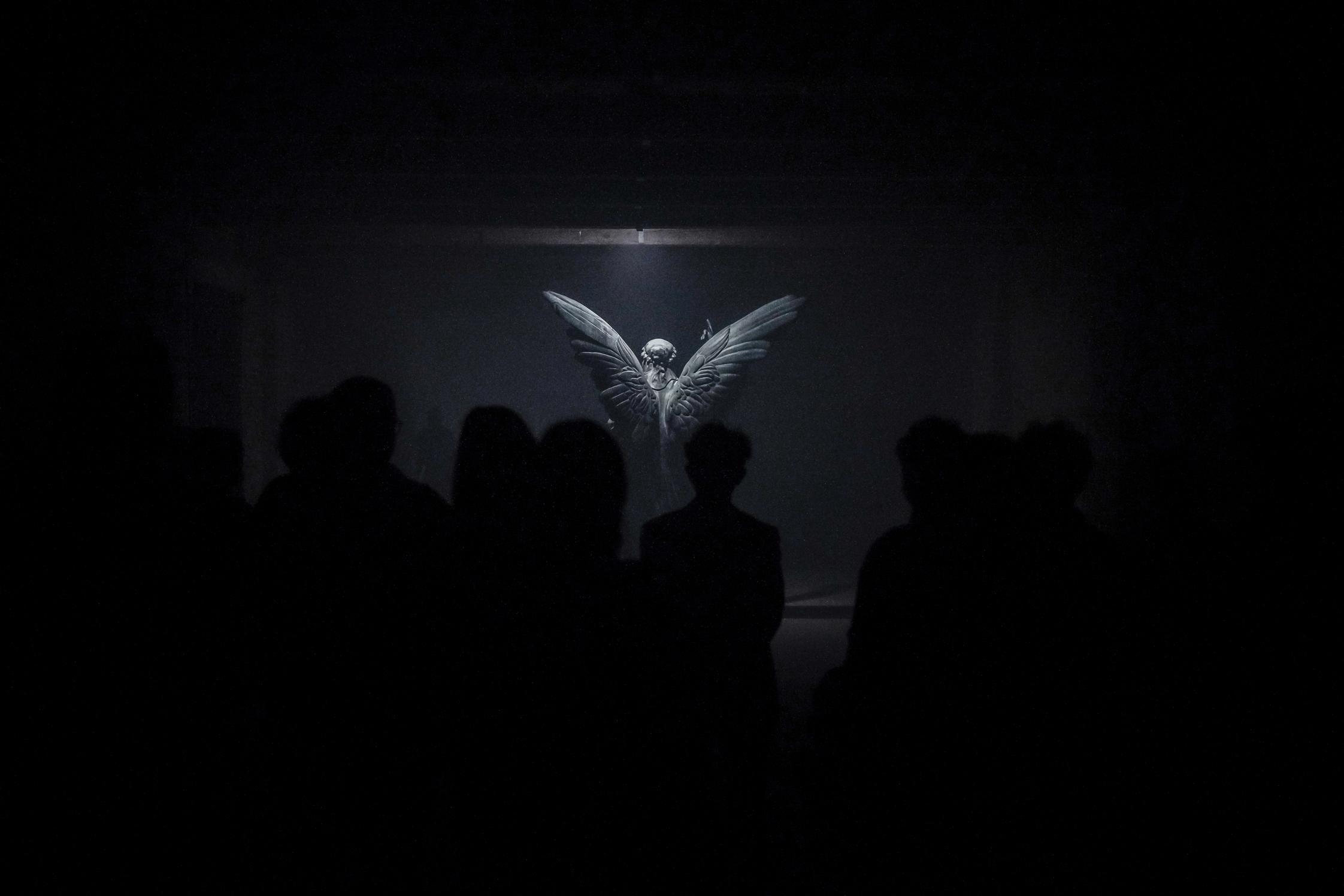
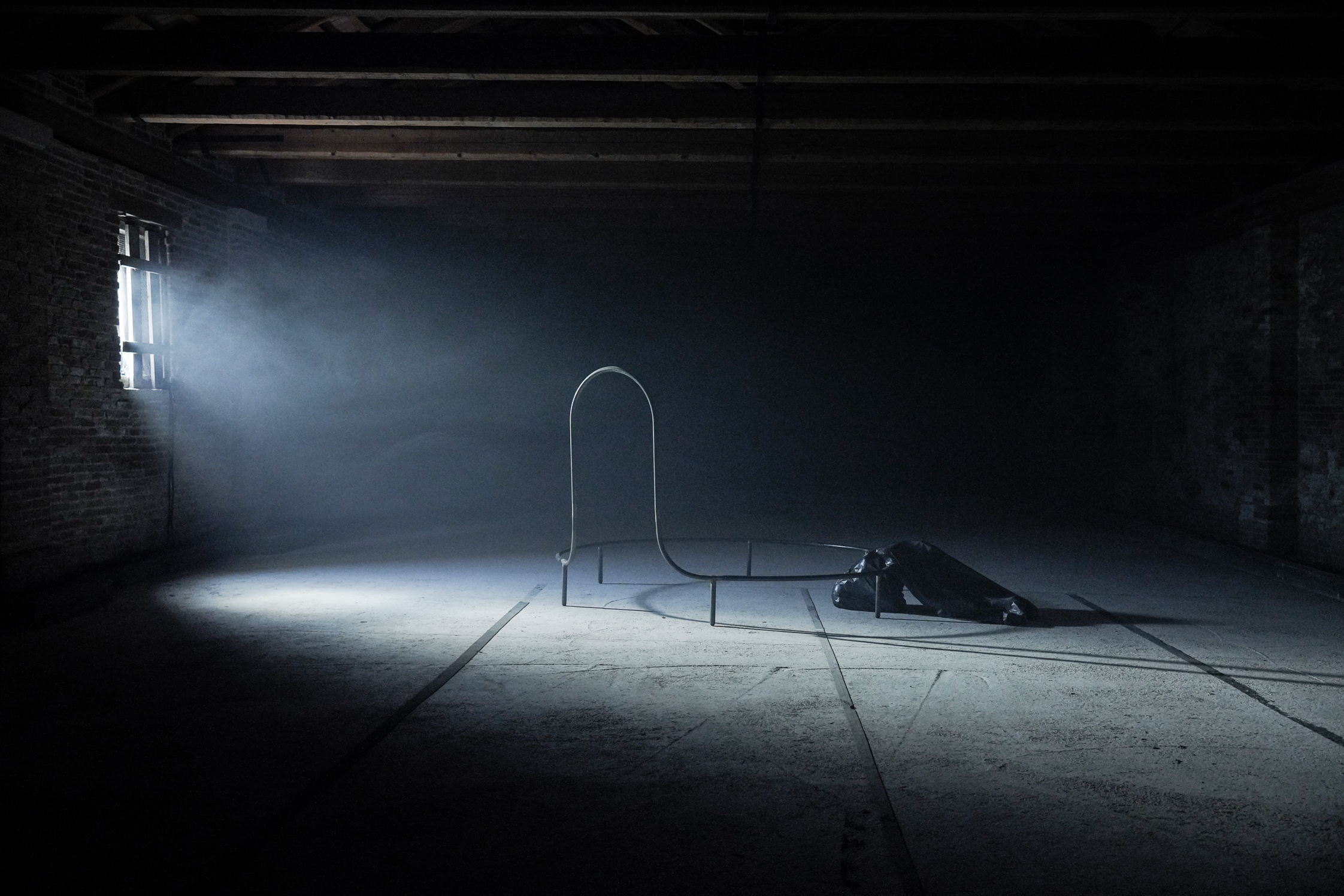
The building housing the action was a large lazaret, built on a small island. There are long, vast, empty corridors that make up the overall space; there is no other architectural element and no object.
The title of the play, “The potato Eaters”, functions as a gateway. These are the only data.
I do not have a speech to make, but out of my great love for contradiction I now throw into the ground a handful of words that seem to me to have something to do with the action conceived here.
Fall, Statue, Hunger,
Caricature, History, Three, Affection,
Friend, Wax, Brown, Christus, Ribbon, Lingua Imperii,
Black Star.
Anything that binds these words together does not belong to my jurisdiction.
R.C.
I mangiatori di patate is a theatre of descent—a catabasis into the clangor of a catastrophe that concerns us all. It reverberates through the volumes of the Lazzaretto Vecchio in Venice, whose long wings still bear the memory of quarantine and disease. Clatters, hums, and pulsations emerge as echoes of events already lived or foreseen: they are there to alert time itself.
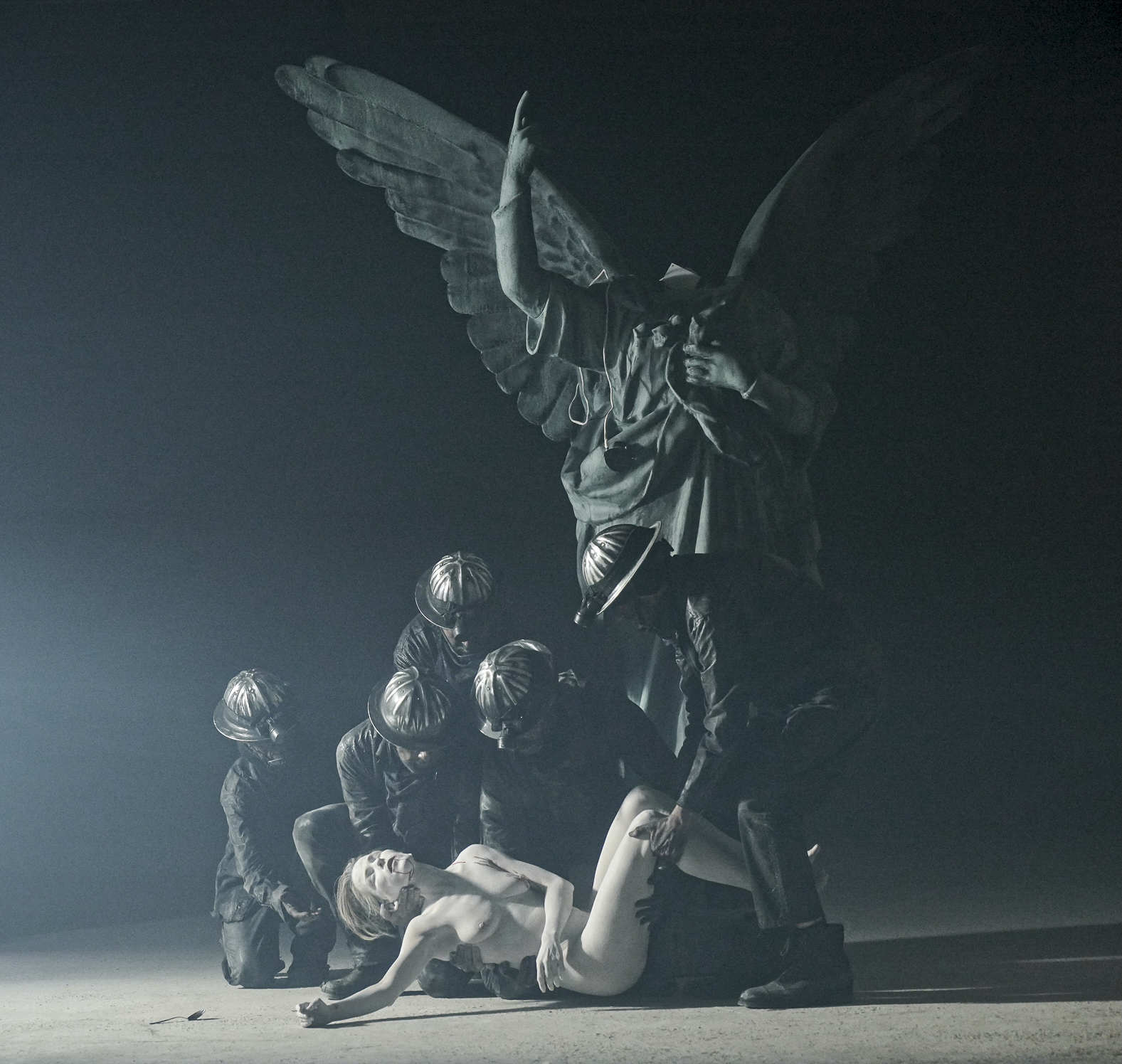
In radical darkness, the vortex of a typhonic force reminds us that history cannot turn its back on its own ruins. A compact cluster of figures—at the frontier of the most remote kind of presence—emerges from a deep night. They share something with the miners and oilers of the Borinage, whom Van Gogh portrayed with extreme devotion. They carry on their skin the marks of a defenseless obscurity of which they are the sensible extension. Descent and emergence from the abyssal well converge, and it is there that a prodigious discovery unfolds: the opaque pearl of language. And it is at that moment that violence reveals itself, demanding to speak on its behalf—it speaks instead of you.
Clothed in authority, discourse emerges from a parasitic mouth. Under the sign of compulsion, it argues without content. Less important is what it says than the fact its act of speaking to you. Blows of repetition and repetitions of blows strike the face until it disappears. Lip plates stenograph the event of language as a passivity that starves whoever must sustain it. Outside habitual grooves, this speech reveals itself to be saturated with obsessions, xenoglossia, and convulsions—products of the painful split of dissociation. And an organ without a body is left to swing from the raised arm of the final judgment, which allows no appeal.
Piersandra Di Matteo
Premiere: May 31, 2025, Isola del Lazzaretto Vecchio, Venice Lagoon